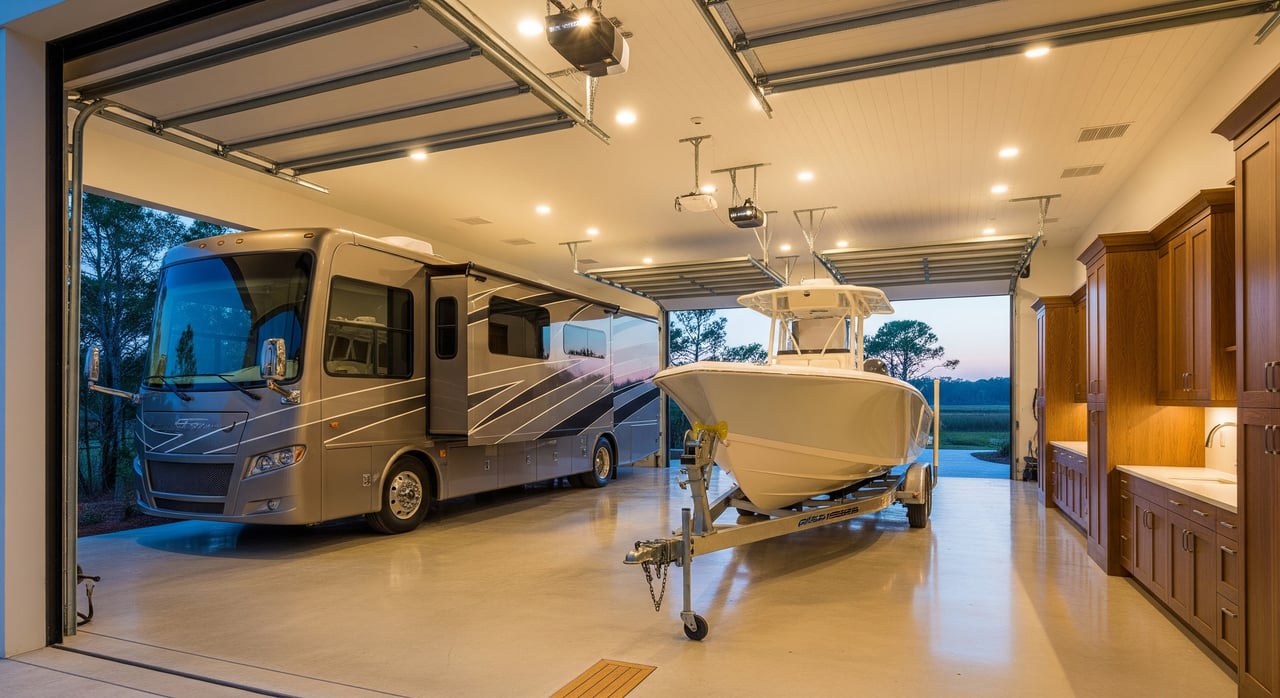
Do you dream of rolling your RV into a protected bay or backing your boat into a clean, covered space after a day on the water? In Summerdale, smart garage design makes that easy and protects your investment from sun, humidity, and storm risks. You want a solution that fits your lot, meets local rules, and adds long-term value. This guide walks you through the essentials for Baldwin County, from sizing and setbacks to wind ratings and septic considerations. Let’s dive in.
Why Summerdale garages need planning
Building in coastal Alabama asks a little more from your plans. You have to consider wind exposure, local permitting, and how your lot handles drive lengths and turning space. A little homework up front keeps your project on time and on budget.
Coastal wind and code requirements
Our region sees tropical systems and high winds. Your garage should meet the Alabama building code and local adoption of national standards for wind resistance. Prioritize secure roof anchorage, wind-rated overhead doors, and a structural design that resists uplift and racking.
Zoning, setbacks, and HOAs
In unincorporated Baldwin County, you will work with Baldwin County Planning & Zoning and Building Inspection. Setbacks, maximum lot coverage, and accessory building rules vary by zoning district and sometimes by recorded subdivision plats. If your property has an HOA or deed restrictions, those rules may be stricter than the county’s. Always verify whether accessory buildings can sit in front of the house line and if there are limits on visible RV or boat parking.
Flood zones and septic constraints
If your parcel sits in a Special Flood Hazard Area, floodplain development rules can affect floor elevations, construction methods, and door types. On lots with septic systems, keep clear of drain fields and respect required separations. Any RV waste connection needs approval from Baldwin County Environmental Health and may trigger a separate septic permit.
Size it right for boats and RVs
Start with your largest vehicle, plus some margin for gear and future plans. It is easier to size for the next rig now than to rebuild in a few years.
Door and bay dimensions
- Single bay for trucks, Jeeps, or a tucked boat trailer: door width 10 to 12 ft, door height 8 to 10 ft.
- Dedicated RV or large-boat bay: door width 12 to 14 ft minimum; door height 10 to 14 ft depending on your rig. Many Class A motorhomes need 12 to 14 ft of door height.
- Bay width: allow 12 to 14 ft per bay so you can open doors, load gear, and walk around safely.
Depth and clearances
- Boats on trailers or travel trailers often need 45 to 60 ft of depth.
- Large motorhomes typically need 40 to 50 ft of clear depth.
- Aim for 12 to 14 ft of interior clear height to account for A/C units and roof accessories.
- If you plan a workshop, add 10 to 15 ft of width or a separate work bay so tools and benches do not crowd your vehicle.
Pull-throughs and driveway design
Pull-through bays make life easier and reduce tight turns. For a 28 to 40 ft trailer or RV, a 90-degree turn can require a 35 to 45 ft turning radius. Where a pull-through is not possible, design a generous apron or hammerhead turn so you can back in without crossing property lines or encroaching on a right-of-way. Check for road and drainage easements before you lock in a long driveway.
Slab, structure, and wind readiness
Your slab carries the load, and your door keeps the weather out. Get both right for safer storage and smoother resale.
Slab thickness and reinforcement
- Light use: 4 in. concrete on a compacted base works for cars and light trucks.
- Heavy RVs, boats, and lifts: 6 to 8 in. reinforced concrete with rebar or wire mesh on a well compacted subbase is recommended.
- Concentrated loads from jacks, stands, or lifts deserve engineered details. Also plan a slight slope, about 1/8 to 1/4 in. per foot, toward a safe drainage point. Install floor drains only if permitted and properly tied to an approved system.
Doors and wind ratings
Choose overhead or roll-up doors with wind ratings that meet local code. Reinforced tracks and frames help keep doors in place during high-wind events. Proper anchorage and hardware are not optional in hurricane-prone zones. Document these specs for future buyers.
Utilities and hookups that work
Plan electrical, water, and waste with both code and convenience in mind.
Electrical planning
Install a dedicated 120/240V 50-amp RV outlet near the parking spot. This protects your home circuits and makes pre-trip prep simple.
Add dedicated 120V circuits for tools, chargers, and climate control. Follow National Electrical Code requirements and pull the proper permits.
Water and waste options
- Include frost-free hose bibs and an easy-to-reach freshwater fill point.
- If you want an RV dump or gray/black water tie-in, talk to Baldwin County Environmental Health first. Many properties with onsite septic have limits on direct discharge from RVs and may require additional approvals.
Placement on your lot
Locating your garage is as important as sizing it. Good placement respects setbacks, improves usability, and protects essential systems.
Setbacks and easements
Front, side, and rear setbacks in Baldwin County vary by zoning. Typical ranges are front 20 to 30 ft, side 5 to 15 ft, and rear 10 to 25 ft, but you must confirm the exact numbers for your parcel. Never place structures over utility or drainage easements. Keep long driveways and pull-through alignments clear of these areas to avoid rework later.
Floodplain elevation
If your lot is in a mapped flood zone, accessory structures may need to sit above the base flood elevation or use flood-resistant construction. Nonhabitable enclosures below the base flood elevation are treated differently than living spaces. Discuss your plan with county officials so you meet the right standard and understand the insurance implications.
Features that boost resale
You want your garage to work today and sell well tomorrow. Focus on utility, durability, and documentation.
- A pull-through bay or a wide, easy turn-around.
- A 14 ft clear door with 12 to 14 ft interior height.
- A reinforced slab designed for heavy loads, with specs saved for buyers.
- Sun and salt protection for boat tops and RV roof units.
- A dedicated 50-amp RV hookup and an exterior freshwater fill station.
- Secure storage with lockable cabinets, built-in shelving, and a mezzanine or attic for long items.
- Insulation and finished walls if you plan climate control.
- A wash area with approved drainage if allowed.
- Security lighting, good site drainage, and durable driveway surfacing.
- Thoughtful landscaping and screening to reduce the visual impact of large vehicles.
What to skip
- Oversized, high-finish buildings that feel out of scale for the neighborhood.
- Complex waste hookups that conflict with septic rules or will be costly to maintain.
- Turning the garage into living space without understanding accessory dwelling rules and permits.
Storage ideas for gear
Keep boating and camping gear organized and safe so you can get on the road or water faster.
- Mezzanine or loft space over the utility bay for seasonal items.
- Wall racks for rods, ladders, kayaks, and long gear.
- Fold-away hose reels and a simple wash station, routed to an approved drain.
- A fire-safe cabinet for fuels and chemicals, located away from living areas and heat sources.
- A covered side awning for quick servicing and shade.
Step-by-step plan
A clear process helps you avoid surprises and stay compliant from day one.
Pre-purchase or pre-design
- Get the recorded plat or site survey showing setback lines, easements, septic, and well locations.
- Ask for copies of any prior permits for existing accessory structures.
- Check the parcel’s flood zone status.
- Call Baldwin County Planning & Zoning to confirm allowable accessory building size and setbacks for your zoning.
- Contact Baldwin County Environmental Health before planning any RV dump or plumbing tie-ins to septic.
Design and build
- Confirm which building, electrical, plumbing, and floodplain permits you need. Schedule inspections early.
- Specify wind-rated doors, roof systems, and anchorage to meet local wind design requirements.
- Design the driveway for heavy loads with a strong base and adequate turn space.
- Engineer slab thickness and reinforcement for RV weights and any lift points.
- Plan safe storage for fuel and batteries with ventilation and separation.
- Keep all documents. Save permits, engineered plans, inspections, and an as-built site plan for resale.
Questions to ask sellers or your builder
- Are there HOA or deed restrictions that limit visible RV or boat parking or structure size?
- Where are the septic drain field and potable well?
- Has the parcel been in a floodplain or had flood insurance claims?
- Are existing garages or driveways permitted, and are there any variances?
Common mistakes to avoid
- Assuming your lot can fit a long, tall pull-through without checking setbacks, easements, and septic fields.
- Underestimating door height. Measure your RV or boat on trailer with antennas and A/C units.
- Pouring a thin slab that cracks under point loads or jacks.
- Skipping wind-rated doors and proper anchorage in a hurricane-exposed region.
- Adding unpermitted plumbing for RV waste that conflicts with septic rules.
Bringing it all together
A boat- or RV-ready garage in Summerdale should feel easy to use, built to last, and fully compliant. When you size the bay correctly, respect setbacks and floodplain rules, and invest in wind-rated doors and a reinforced slab, you end up with a feature that enhances daily life and future resale. Save your documentation and build with the next owner in mind.
If you want help evaluating a lot or planning your next move, reach out to The Beach to Bay Group for local introductions, parcel checks, and a smooth path from idea to closing. Start Your Beach to Bay Search.
FAQs
What size garage door do I need for a Class A motorhome in Summerdale?
- Many Class A rigs require a door 12 to 14 ft high and 12 to 14 ft wide. Confirm your exact roof height, including A/C units and antennas, before you finalize the opening.
How deep should a garage be for a boat on a trailer?
- Plan for 45 to 60 ft of depth to allow the trailer tongue, motor overhang, and some working room. Measure your full length and add 10 to 15 ft of clearance.
Do I need a permit to add an RV electrical hookup?
- Yes. Electrical work typically requires a permit and inspections. A dedicated 120/240V 50-amp outlet is recommended for RVs.
Can I connect my RV to my home’s septic in Baldwin County?
- Maybe. You need approval from Baldwin County Environmental Health. Many onsite systems have limits on direct RV discharge and may require a separate permit or an alternative solution.
Are pull-through bays worth it on smaller lots?
- If your lot can accommodate one, a pull-through reduces tight turns and daily stress. If space is tight, design a wide apron or hammerhead turn with adequate turning radius.
What documentation should I keep for resale?
- Save building, electrical, plumbing, and floodplain permits, engineered plans, inspection records, and an as-built site plan. Clear documentation increases buyer confidence and value.