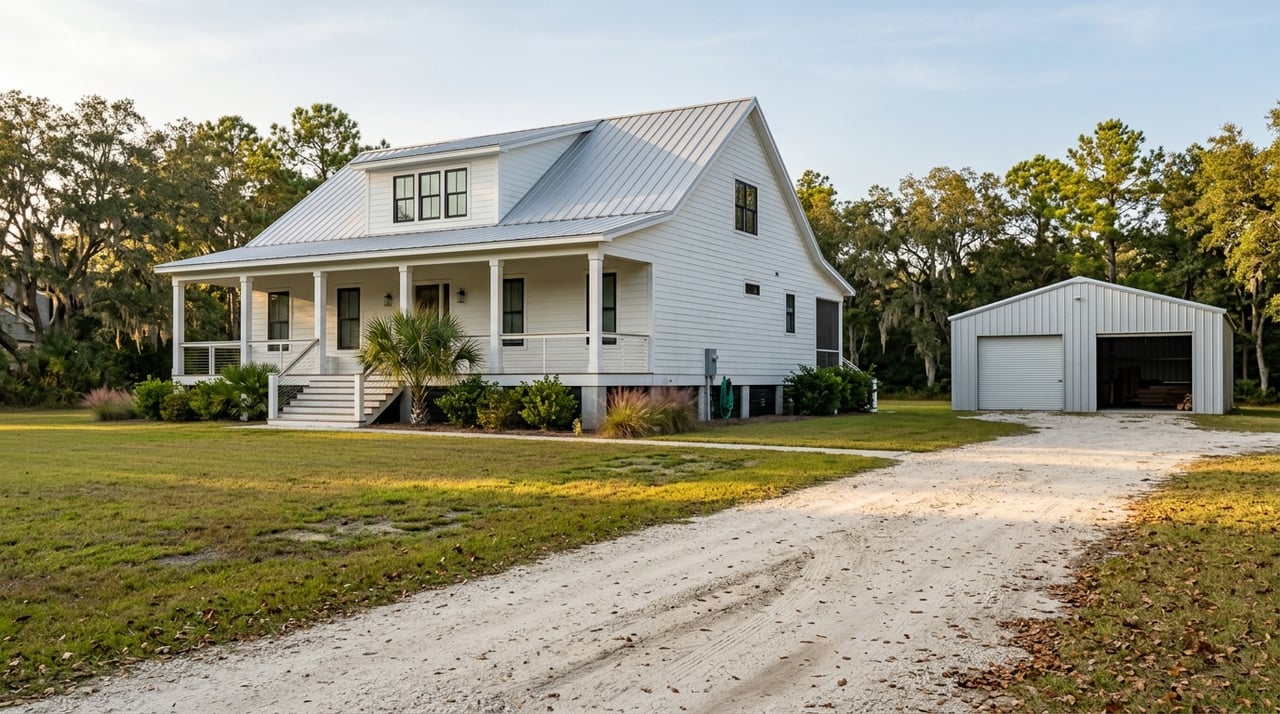
Dreaming of a place where you can spread out, keep a few animals, build a barn, or create your own small homestead? In Elberta, that dream can be realistic, but acreage and mini-farm properties come with a different set of questions than a typical neighborhood home. If you are considering buying land or a rural-style property here, you need to look beyond the house itself and understand zoning, utilities, access, and restrictions before you close. Let’s dive in.
Why Elberta appeals to acreage buyers
Elberta offers a mix of rural character and practical access to the rest of Baldwin County, which makes it attractive if you want more room to live, garden, or create a small hobby-farm setup. What stands out most is that the local market is not one-size-fits-all.
Current acreage options range from estate-style lots to larger rural compounds. A sample of active properties includes lots around 3 acres, a 5.18-acre property with multiple structures, and even a 21-acre retreat with a custom home, barndominium, pole barn, and RV storage, according to current Elberta land listings.
That variety matters because your search should match your actual goals. If you want room for a workshop and garden, your ideal property may look very different from someone searching for horse space, multiple homes, or an existing agricultural setup.
Start with zoning first
Before you fall in love with a piece of land, check the zoning. In Elberta, the clearest fit for many acreage and mini-farm buyers is the R-A Rural Residential Agricultural District, which is designed for rural land used for agricultural, forest, or similar open-space purposes.
Under Elberta’s zoning ordinance, R-A property requires a minimum lot area of 80,000 square feet, or about 1.84 acres, plus a minimum width of 150 feet. By comparison, some R-1 lots can be smaller depending on whether public water or sewer is available, so utility service can directly affect what is allowed on a parcel under the Town of Elberta zoning ordinance.
This is one reason parcel-specific review matters so much. Two properties with similar acreage may not offer the same flexibility if they sit in different districts or have different utility access.
Zoning is only the starting point
Even if zoning appears to allow your intended use, you still need to confirm the exact status of that parcel. The ordinance references uses such as home gardens, home occupations, livestock, and poultry or livestock raising, which suggests Elberta is structurally friendly to hobby-farm use, but buyers should still verify what applies to the specific district and property.
You should also remember that recorded restrictions can override what zoning seems to allow. The town ordinance states that deed restrictions and restrictive covenants apply when they are more stringent than the ordinance, so a property can be zoned in a way that looks flexible while still being limited by private restrictions.
Understand what the market really offers
When buyers hear “mini-farm,” they often picture one standard type of property. In Elberta, the inventory tells a different story.
Some options are more like estate lots in a planned setting. For example, Heritage Farms is marketed as a community with 22 three-acre lots and one four-acre lot, along with an HOA and established covenants, based on the same Elberta acreage listing sample.
Other parcels are marketed with fewer restrictions. One 3.28-acre lot on US 98 is advertised with no HOA and room for horses and chickens, while another acreage property notes deed restrictions that exclude mobile homes, tiny homes, hooved animals, and commercial businesses including poultry farms. That contrast is a good reminder that acreage does not automatically mean unrestricted.
Common property types you may see
As you search in Elberta, you may come across:
- Estate-sized lots in newer communities
- Small homestead properties around 3 to 5 acres
- Acreage with multiple structures such as guest houses or barns
- Larger rural compounds with workshops, RV storage, or barndominiums
- Land that is already in agricultural use
If the property is already functioning as farmland, pastureland, or timberland, Elberta’s ordinance says that land presently being used for those purposes may continue in that use regardless of zoning district. That can be helpful if you are buying land that already operates more like a small farm than a suburban homesite, according to the town ordinance.
Check barn and accessory-building rules
If part of your vision includes a barn, workshop, shed, chicken coop, or detached garage, placement rules matter. Elberta allows accessory structures, but there are standards you need to understand before you buy.
Detached accessory buildings in residential districts must be at least 10 feet from side and rear lot lines. They can be no more than one story, and they may cover no more than 30% of the rear yard, according to the Town of Elberta ordinance.
For larger planning purposes, the R-A district setbacks are also important. Setbacks include 40 feet in the front on arterial or collector roads, 30 feet in the front on local or service roads, 30 feet in the rear, and 15 feet on the side.
Small structures still need review
The ordinance also notes that detached accessory buildings, decks, and porches under 200 square feet do not need a Land Use Application. Even so, they still must meet setback and wind-code requirements.
That means you should not assume a small structure can go anywhere on the property. If you are buying acreage with plans for several outbuildings, it is smart to map the usable area early.
Utilities and septic can vary by parcel
One of the biggest differences between buying acreage and buying in a typical subdivision is infrastructure. In Elberta, utilities are more of a patchwork, so you should confirm service for the exact parcel rather than relying on a general assumption.
According to the Town of Elberta public works page, Riviera Utilities serves power and gas in a large portion of the northern corporate limits and provides water to most of Elberta. Perdido Bay Water serves some outlying eastern areas, Baldwin EMC serves the southern part of CR 83 and the Miflin area, Orange Beach Sewer serves the Miflin area, and Baldwin County Sewer serves much of northern Elberta.
If sewer is not available, septic may be the path forward. Elberta’s ordinance allows septic tanks in accordance with ADPH and Baldwin County Health Department rules.
Septic approval should happen early
The septic process is not something to leave until the last minute. Baldwin County’s quick guide says septic releases come from the health department, and the county also recommends a soils test by a registered soils professional before moving forward with installation.
The same Baldwin County quick guide explains that a Land Use Certificate must be issued before a building permit in zoned areas. If you are planning to build, add structures, or significantly improve the property, early coordination can save you time and frustration.
Verify access before you buy
Legal access can be easy to overlook when you are focused on acreage, views, or outbuildings. But access is one of the most important due diligence items on a rural or semi-rural property.
Baldwin County notes that driveway permits depend on whether the road is county or state maintained. One current 3.28-acre Elberta listing even relies on a 30-foot easement from US 98 instead of direct frontage, which shows why you should verify legal access, driveway requirements, and boundary details before closing.
The county also recommends using the Baldwin County quick guide resources to confirm building-permit jurisdiction and parcel details. Since properties inside Elberta town limits still fall within Baldwin County’s building permit jurisdiction, exact location matters more than many buyers expect.
Flood and wetlands can affect buildable area
On acreage, the total land size does not always equal usable land size. A parcel may look large on paper but still have limitations that affect where you can place a home, barn, or driveway.
Elberta’s ordinance requires a 35-foot setback from jurisdictional wetlands with a 5-foot upland buffer. It also notes that a wetland delineation may be needed to determine buildable area, according to the zoning ordinance.
Flood review should also happen early. The county building department keeps flood information for Town of Elberta permits, which makes early flood-zone review an important step if you are comparing multiple acreage properties.
A practical checklist for buyers
If you are shopping for acreage or a mini-farm property in Elberta, these are the questions to answer before you move forward:
- What is the zoning district for the parcel?
- Does the lot size meet district requirements?
- Are livestock, poultry, gardens, or home-based agricultural uses allowed for this property?
- Are there deed restrictions, HOA rules, or covenants that are stricter than zoning?
- Does the property have public water, sewer, or both?
- If not, is the site suitable for septic based on health department requirements and soils testing?
- Does the parcel have legal access and any needed driveway approvals?
- Are there wetlands, flood-zone concerns, or setback constraints that reduce buildable area?
- Where can you place barns, sheds, workshops, or other accessory buildings?
- Is the property inside Elberta town limits or elsewhere in county permitting jurisdiction?
Why local guidance matters
Acreage purchases often sound simple at first. Then the real questions show up: Can you actually build where you want? Can you keep the animals you want? Will utilities and septic support your plans? Are there private restrictions that change the whole use case?
That is why local, property-specific guidance is so valuable. When you are weighing multiple parcels or trying to understand how a mini-farm vision fits into Elberta’s rules, having someone help you connect zoning, access, utilities, and restrictions can make your decision much clearer.
If you are exploring acreage or mini-farm properties in Elberta, Rachel Wallace can help you narrow the options, ask smarter due diligence questions, and move forward with more confidence.
FAQs
What zoning should you look for when buying acreage in Elberta?
- Many buyers start with the R-A Rural Residential Agricultural District because it is intended for rural land used for agricultural, forest, or similar open-space purposes.
What is the minimum lot size for R-A property in Elberta?
- Under Elberta’s zoning ordinance, the minimum lot area in the R-A district is 80,000 square feet, or about 1.84 acres.
Can you keep livestock or poultry on acreage in Elberta?
- Elberta’s ordinance references livestock, poultry or livestock raising, and home gardens, but you should verify the exact approval status for the specific parcel, district, and any private restrictions.
Do mini-farm properties in Elberta always come without restrictions?
- No. Some properties are marketed with no HOA, while others have HOA rules, deed restrictions, or covenants that may be more restrictive than zoning.
Do you need to check septic options before buying Elberta acreage?
- Yes. If sewer is unavailable, you should confirm septic eligibility with the health department and consider a soils test before you close.
Why does legal access matter for Elberta land purchases?
- Some acreage parcels may rely on easements rather than direct road frontage, so you should confirm legal access and driveway approval requirements before buying.