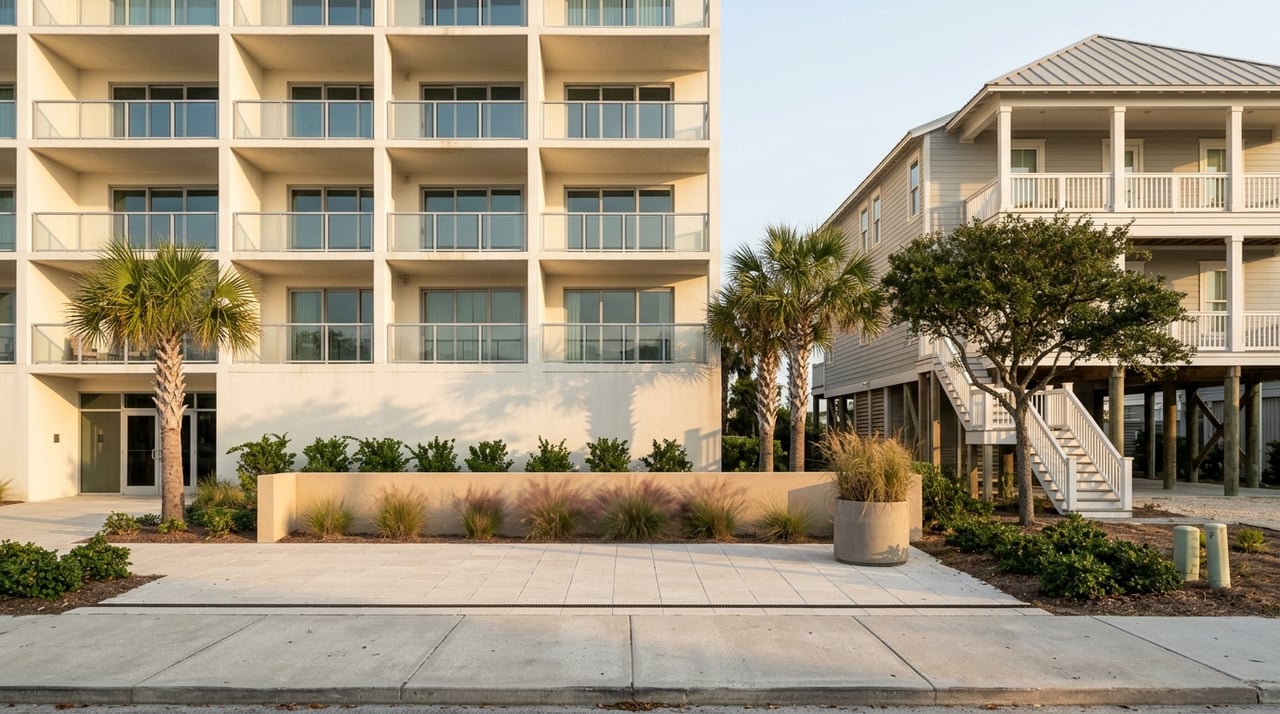
Trying to choose between a Gulf Shores condo and a beach house? You are not alone. Many buyers love the idea of owning near the water, but the right fit often comes down to how you plan to use the property, how hands-on you want to be, and what monthly costs you are comfortable carrying. In this guide, you will see how condos and beach houses compare on price, upkeep, rental flexibility, and day-to-day ownership in Gulf Shores. Let’s dive in.
Gulf Shores Price Differences
If budget is one of your biggest decision points, condos usually offer the lower entry point in Gulf Shores. Public market trackers in spring 2026 place Gulf Shores broadly in the mid-$400,000s to low-$500,000s, depending on the source and methodology. At the same time, Redfin shows condos for sale at a median listing price of about $425,000, which makes condos a more accessible option in the current inventory snapshot.
The condo market also offers a broad range. Current listings stretch from around $327,500 for a one-bedroom gulf-front unit to roughly $1.1 million for a four-bedroom gulf-front condo. That range gives you options whether you are looking for a simpler second home or a larger property with strong resort appeal.
Beach houses vary even more by location. Inland single-family homes can still show up from the low-$300,000s to mid-$500,000s, but true beach-road and beachfront detached homes command a much higher price. Current examples include a near-beach furnished house at $800,000 and West Beach beachfront homes from about $1.575 million to nearly $3 million.
What price really means for buyers
A lower list price does not always mean lower ownership cost, and a higher price does not always mean better fit. You need to look at the full picture, including insurance, dues, utilities, and maintenance. In Gulf Shores, that full-cost comparison matters even more because coastal ownership comes with added storm and flood considerations.
Condo Ownership in Gulf Shores
For many second-home buyers and out-of-area owners, condos are attractive because they tend to offer a more lock-and-leave ownership style. The condo association manages common elements and shared financial responsibilities for the project. In practical terms, that usually means less day-to-day oversight for you on exterior and common-area issues.
Condo dues are a major part of the equation. Consumer guidance sources note that association fees are typically paid separately from the mortgage and can range from a few hundred dollars a month to more than $1,000. Those dues often help cover common-area upkeep, capital reserves, amenities, and shared maintenance.
Insurance works differently with a condo too. Association fees commonly support master insurance for shared areas, but you still need insurance for your individual unit. That can simplify part of the ownership picture, but it does not remove your responsibility to review what is and is not covered.
Why condos appeal to many coastal buyers
Condos often fit buyers who want convenience, amenities, and less direct responsibility for exterior upkeep. They can also be a practical starting point if you want to enter the Gulf Shores market at a lower price than many detached beachfront homes. For buyers who live out of town, that simplicity can be a major advantage.
Beach House Ownership in Gulf Shores
A beach house gives you more control, more privacy, and often more space. If you want room for a larger group, more separation from neighbors, or a property that feels more independent, a detached home may be the better fit. That extra freedom is part of why many buyers are drawn to houses near the beach.
The tradeoff is responsibility. Homeowners are responsible for maintenance, repairs, utilities, and insurance, including the roof, exterior, systems, and storm-related upkeep. In a coastal setting like Gulf Shores, those responsibilities can feel much more significant than they would inland.
Flood risk also matters. Standard homeowner’s insurance typically does not cover flood damage, and Gulf Shores is a coastal community susceptible to hurricane destruction and periodic flooding. If flood risk is present for the property you are considering, you may need separate flood insurance.
Why beach houses appeal to certain buyers
Detached homes often make sense for buyers who want more flexibility in how they use the property. They can also suit larger families, buyers who want more privacy, or owners who prefer having direct control over the home instead of working within a condo association structure. If you are comfortable managing more moving parts, a beach house can be a strong lifestyle and investment choice.
Upkeep and Carrying Costs Compared
One of the clearest differences between condos and beach houses is how ownership responsibilities are divided. With a condo, shared maintenance and common-area issues are generally handled through the association and funded through dues. With a detached home, those costs and tasks land directly on you.
That does not mean condos are automatically cheaper month to month. HOA or condo dues can be substantial, especially in amenity-rich buildings. But many buyers are willing to pay those fees in exchange for a more hands-off ownership experience.
Beach houses may not have condo dues, but you should expect more direct spending on repairs, exterior care, insurance, and storm preparation. For owners who are not local, that can also mean more coordination with vendors and service providers. If you want a property that requires less oversight, condos often have the edge.
Rental Rules and Short-Term Rental Potential
If you are buying with rental income in mind, both property types can work in Gulf Shores. Gulf Shores and Orange Beach Tourism reported $923 million in lodging-rental spending across Alabama’s Beaches in 2025, and the area continues to attract visitors throughout the year. That tourism demand supports both condos and detached houses as rental products.
Still, condos and beach houses do not operate under the same ownership rules. Condo documents often include leasing restrictions, such as minimum lease terms, limits on transient use, or caps on how many units may be rented. That means you need to review the association documents carefully before you buy.
Detached houses may have fewer association rules, but they are not exempt from city requirements. Gulf Shores requires a rental or business license for owners who rent property within the city limits or police jurisdiction. For short-term rentals, the city also lists a rental fee, zoning review, a local emergency contact, a safety inspection every three years, and lodging-tax collection and remittance.
What to review before buying a rental property
Before you move forward on either option, ask for the documents and details that affect how you can use the property. For condos, that includes recorded CC&Rs, bylaws, budgets, financials, insurance documents, and any available reserve information. For houses and condos alike, confirm the city’s rental licensing, zoning, and lodging-tax requirements before you count on short-term rental use.
Which Option Fits Your Lifestyle Best?
The better choice often comes down to how you want ownership to feel after closing. If you want a simpler setup, shared upkeep, and a more manageable second-home experience, a condo may be the stronger fit. That is especially true if you live out of town and want something easier to maintain from a distance.
If you want more privacy, more room, and more direct control over the property, a beach house may be worth the added responsibility. Houses can be especially appealing if you expect larger gatherings or want a standalone property that feels more personal. The key is being honest about how much time, effort, and cost you want to take on.
A Simple Gulf Shores Buyer Checklist
Use this quick checklist to narrow your choice:
- Choose a condo if you want a lower typical entry point, shared exterior upkeep, and a more lock-and-leave ownership style.
- Choose a beach house if you want more space, more privacy, and more control over the property.
- Compare total monthly costs, not just purchase price.
- Review insurance needs closely, especially for flood exposure.
- Confirm rental rules before you buy, including condo restrictions and Gulf Shores licensing requirements.
- Think about how often you will be in town to manage issues, vendors, and maintenance.
How to Make the Right Choice
There is no one-size-fits-all answer in Gulf Shores. A condo may be the smarter move for a buyer who wants convenience, amenities, and easier remote ownership. A beach house may be the better investment for a buyer who values space, privacy, and greater control, even if that means more maintenance and more insurance complexity.
The best decision usually comes from matching the property type to your real-life goals. Are you buying for easy weekend escapes, personal use plus occasional rentals, or a more active vacation-rental strategy? Once you are clear on that, the condo-versus-house decision gets much easier.
If you want help comparing real options in Gulf Shores, local guidance can save you time and help you avoid surprises. Rachel Wallace can help you weigh price, ownership costs, rental rules, and day-to-day fit so you can buy with confidence.
FAQs
What is the lower-entry option for buyers in Gulf Shores?
- In the current public inventory snapshot, condos generally offer a lower entry point than true beachfront detached homes, with condo listings starting in the low $300,000s and a median condo listing price around $425,000.
What is easier to maintain in Gulf Shores, a condo or a beach house?
- A condo is usually easier to maintain because the association typically handles common-area and shared exterior upkeep, while detached homeowners are responsible for repairs, systems, exterior maintenance, and storm-related issues.
What should Gulf Shores buyers know about condo fees?
- Condo fees are usually separate from the mortgage and may range from a few hundred dollars a month to more than $1,000, depending on the property and what the association covers.
What should Gulf Shores beach house buyers know about insurance?
- Beach house buyers should plan for homeowner’s insurance and review whether separate flood insurance may be needed, since standard homeowner’s insurance typically does not cover flood damage.
What should buyers know about short-term rentals in Gulf Shores?
- Buyers should know that both condos and houses used as short-term rentals must comply with Gulf Shores requirements such as licensing, zoning review, safety inspections, local contact rules, and lodging-tax collection, while condos may also have their own association leasing restrictions.
What is the best fit for an out-of-town buyer in Gulf Shores?
- For many out-of-town buyers, a condo is the more hands-off option because it usually offers a simpler lock-and-leave setup with shared upkeep and less direct maintenance responsibility.