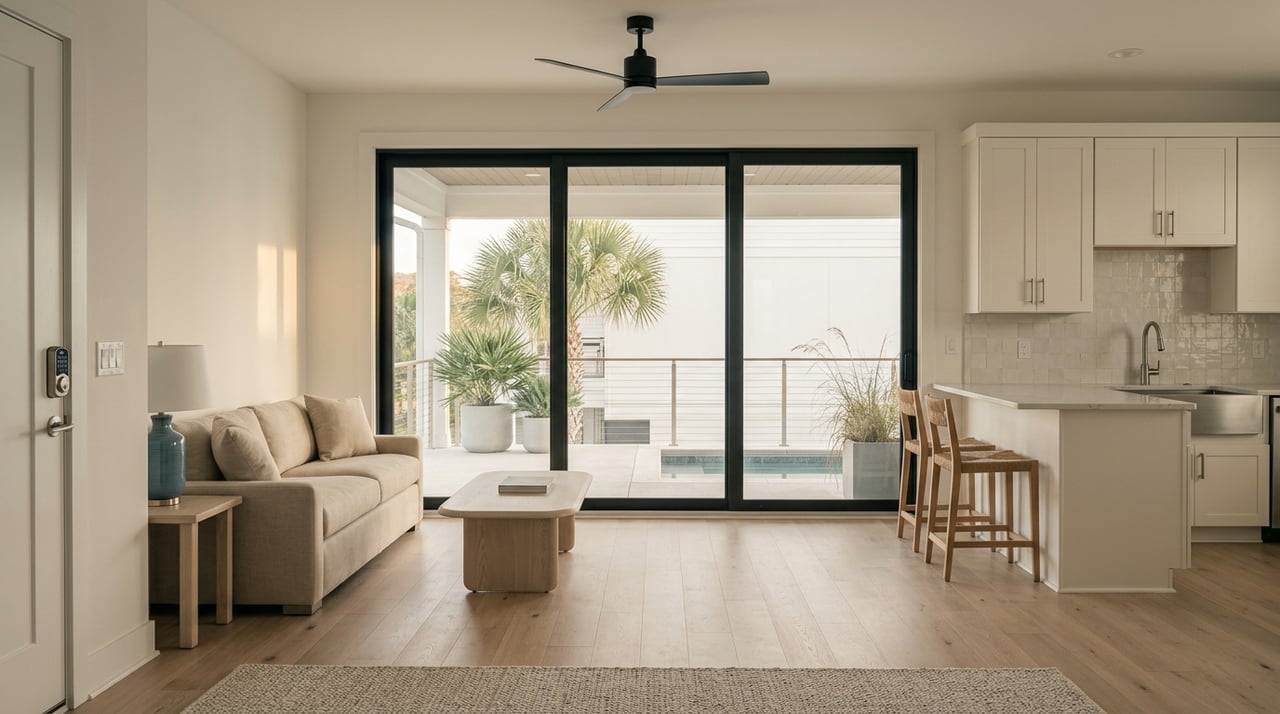
If you picture your Gulf Shores second home helping cover its own costs, you are not alone. Many buyers love the idea of enjoying the coast part of the year and renting the property when they are away, but the details matter more than most people expect. When you turn a second home into a rental in Gulf Shores, you need to think about zoning, licensing, safety, taxes, and day-to-day operations before you ever list a stay. This guide walks you through the practical steps so you can make smarter decisions with fewer surprises. Let’s dive in.
Start With Rental Eligibility
Before you think about furnishings, pricing, or booking calendars, confirm that the property can legally operate as the type of rental you want. In Gulf Shores, vacation rentals are regulated, and city planning materials state that vacation rentals are allowed only in certain districts and overlays. Some multi-family properties may also require a conditional use permit.
That means a property-specific zoning check is one of the most important steps you can take before closing. The city says you can review zoning through its map or Planning Department, and written zoning confirmation is available for a fee. If you are buying with rental income in mind, this is not a box to check later. It should be part of your purchase decision from the start.
Know the 180-day rule
In Gulf Shores, a vacation rental is generally a dwelling rented for fewer than 180 consecutive days. That same 180-day threshold also shows up in Alabama’s transient-occupancy tax rules. If a property is leased for 180 continuous days or more, it may fall into the long-term category instead.
This matters because short-term and long-term rentals do not follow the same city process. The city also notes that one single-family long-term unit leased for 180 days or more may be exempt from annual licensing. If your plan could shift between seasonal and long-term use, be clear about which model fits the property and your goals.
Check HOA or condo rules too
City approval is only one part of the picture. If the property is in a condo building, planned community, or homeowners association, you should also verify private rental rules separately. A unit can be city-eligible and still have restrictions at the association level.
Understand Gulf Shores Licensing
Gulf Shores treats short-term or seasonal renting as a regulated business. The city requires a rental or business license, zoning review, and, when applicable, a Fire Marshal inspection before issuing the certificate. Short-term rentals are treated as their own license category.
The city also says a valid business license is required for any person or company doing business in the city or police jurisdiction. Separate applications are required for separate rental locations, which is important if you plan to own more than one property.
Track renewals and deadlines
Licenses expire on December 31 each year. Renewals are due January 1 and become delinquent after January 31. If you own a second home that you only rent seasonally, it is still important to stay ahead of those dates so your rental plan does not get interrupted.
Set up a local emergency contact
Every vacation rental in Gulf Shores must maintain a local emergency contact. The city defines this as someone who can appear onsite within 120 minutes after a request from law enforcement or firefighters. The city can cite or fine owners who do not keep a current contact on file or who cannot produce that contact when summoned.
For many second-home owners, especially those who live out of town, this requirement shapes the entire operating plan. A local property manager can help satisfy that expectation while also handling guest communication and turnovers.
Prepare the Home for Safety Review
Getting a second home rental-ready is not just about style and comfort. Gulf Shores requires an inspection report or certificate of occupancy before licensing, and the safety ordinance covers a wide list of items. Depending on the property, the review may include smoke detectors, fire extinguishers, interior stairs, emergency rescue openings, electrical systems, balconies or decks, pools, exterior stairs, foundations, and visible 911 addressing.
If the city finds an immediate hazard, it can suspend the license and require the unit to be vacated until the issue is corrected. That makes pre-listing prep especially important for owners who want to avoid delays after launch.
Verify the current inspection interval
City materials show different timing references for repeat safety inspections. One checklist says inspections are required every three years, while the 2025 ordinance says a report is current if dated within five years of the start of the license year. The safest approach is to verify the current interval with the Building Department when you apply or renew.
Pay attention to flood and access issues
City materials also point owners to floodplain management and FEMA flood maps during the rental-safety process. For coastal or low-lying homes, flood considerations should be part of your due diligence before you buy and part of your maintenance plan after you close.
Parking matters too. Current zoning materials state that parking should be on driveways or parking lots designed for the use, and parking in public street rights-of-way is prohibited. For buyers comparing properties, off-street parking capacity can make a real difference in how practical the home will be as a rental.
Build a Realistic Rental Budget
A lot of owners focus on the nightly rate first. That number matters, but it is only one piece of the income picture. In Gulf Shores, monthly gross revenue for lodging tax purposes includes more than just rent. The city checklist says gross revenue includes rental, parking, and cleaning fees.
That means your posted nightly rate does not equal what you keep, and your tax reporting may include charges you might not think about at first glance. A better budget accounts for taxes, management fees, turnover costs, supplies, maintenance, and seasonality.
Understand local lodging taxes
Gulf Shores says lodging tax applies to short-term condo, house, and duplex rentals in the city limits and police jurisdiction. The city’s current lodging tax page lists a total rate of 16% in the corporate limits and 11% in the police jurisdiction.
In the corporate limits, that total includes 4% state, 2% Baldwin County, and 10% city. In the police jurisdiction, the city portion is 5% instead of 10%.
Know when taxes are due
Taxes are due on or postmarked by the 20th for the prior month. The city also requires a return even if you collected no taxes or earned no receipts during that period. That filing requirement can catch owners off guard if they assume no bookings means no paperwork.
The city also warns that if you use a management company and later remove that company, you become responsible for collecting and remitting taxes to the state, county, and city. If you plan to self-manage later, prepare for that workflow before making the switch.
Ask an accountant about mixed use
If you use the home personally and rent it out part-time, the tax side gets more complex. The IRS says expenses generally must be divided between rental use and personal use for a dwelling unit used for both purposes. For many second-home owners, that is a good reason to involve an accountant early rather than trying to sort it out at tax time.
Set Up Operations for Fewer Headaches
A successful rental usually runs on systems, not guesswork. Once the city requirements are clear, you still need a plan for guest stays, emergency issues, cleaning, restocking, and property wear. This is where many second-home owners either create a reliable process or end up constantly reacting.
A guest-ready setup often includes durable furnishings, spare linens, simple kitchen equipment, clear house instructions, and a lockable owner closet. Choosing items that are easy to clean and easy to replace can save time and money over a full season.
Decide who handles what
For many owners, a local property manager is worth considering. City materials note that property managers have their own property-management license, and they can help with guest communication, turnovers, and the local emergency-contact requirement.
You may also want an accountant for tax workflow and a real estate agent who understands rental-friendly comps, zoning questions, and income goals before you buy. For out-of-area buyers in particular, having local support can make ownership much smoother.
Use Market Data to Price Smarter
Gulf Shores is not a random rental market. Gulf Shores and Orange Beach Tourism reported 7.14 million visitors and $6.87 billion in visitor spending for Gulf Shores, Orange Beach, and Fort Morgan in 2025. That supports the idea that there is a large visitor base looking for places to stay.
Still, demand alone does not set the right rate for your property. Seasonality, location, parking, property type, amenities, and management approach all affect pricing.
Watch public lodging trends
The destination’s statistics page publishes 30-day projected lodging reports, 90-day projected lodging reports, destination growth indicators, accommodations inventory, and annual economic impact sheets. These tools can help you study seasonality and benchmark your property more realistically.
Instead of choosing a rate based only on what you hope to earn, build a pricing plan around actual market conditions and your full expense load. That creates a much clearer picture of whether the home supports your goals.
Follow a Simple Launch Checklist
If you want to turn a Gulf Shores second home into a rental without unnecessary delays, it helps to move in order. A simple checklist can keep the process focused.
- Confirm zoning and short-term rental eligibility for the specific property.
- Verify HOA or condo rental restrictions separately.
- Apply for the city rental or business license.
- Set up the required local emergency contact.
- Schedule the safety inspection and fix any issues before launch.
- Set up the lodging tax workflow and clarify who will remit taxes.
- Build a pricing plan that accounts for taxes, cleaning, parking, seasonality, and management costs.
- Furnish the home for durability, easy turnover, and clear owner storage.
Buy With the End Use in Mind
If you are still shopping for a second home, the best rental strategy starts before you ever make an offer. A property may look perfect in photos and still be a weak fit for your rental goals because of zoning, parking, layout, building rules, or operating costs.
When you buy with the end use in mind, you can avoid expensive course corrections later. That means looking beyond views and finishes to ask practical questions about licensing, guest access, safety requirements, and realistic income potential.
If you want help evaluating a Gulf Shores condo or beach house for personal use, rental use, or both, Rachel Wallace can help you sort through the details with local insight and a concierge-style approach.
FAQs
What counts as a short-term rental in Gulf Shores?
- In Gulf Shores, a vacation rental generally means a dwelling leased, subleased, rented, or licensed for fewer than 180 consecutive days.
Does a Gulf Shores second home need a rental license?
- Yes, Gulf Shores treats short-term or seasonal renting as a regulated business and requires a rental or business license, zoning review, and in some cases a Fire Marshal inspection before issuing the certificate.
Does a Gulf Shores rental owner need a local contact?
- Yes, every vacation rental must maintain a local emergency contact who can appear onsite within 120 minutes after a request from city law enforcement or firefighters.
What taxes apply to a short-term rental in Gulf Shores?
- Gulf Shores says lodging tax applies to short-term condo, house, and duplex rentals, with a total rate of 16% in the corporate limits and 11% in the police jurisdiction based on the city’s current tax page.
When are Gulf Shores lodging taxes due?
- Gulf Shores says lodging tax returns are due on or postmarked by the 20th for the prior month, and a return is required even if no taxes were collected or no receipts were earned.
What should a buyer check before buying a Gulf Shores rental property?
- A buyer should confirm zoning eligibility, review any HOA or condo restrictions, evaluate off-street parking, understand licensing and safety requirements, and build a budget that includes taxes, cleaning, seasonality, and management costs.